Puglia town guide
Retiring in Lecce
A southern city with a real winter population, university life, and costs below the center and north. The tradeoff is distance, both to the United States and to the rest of Italy.
Last reviewed
The overview
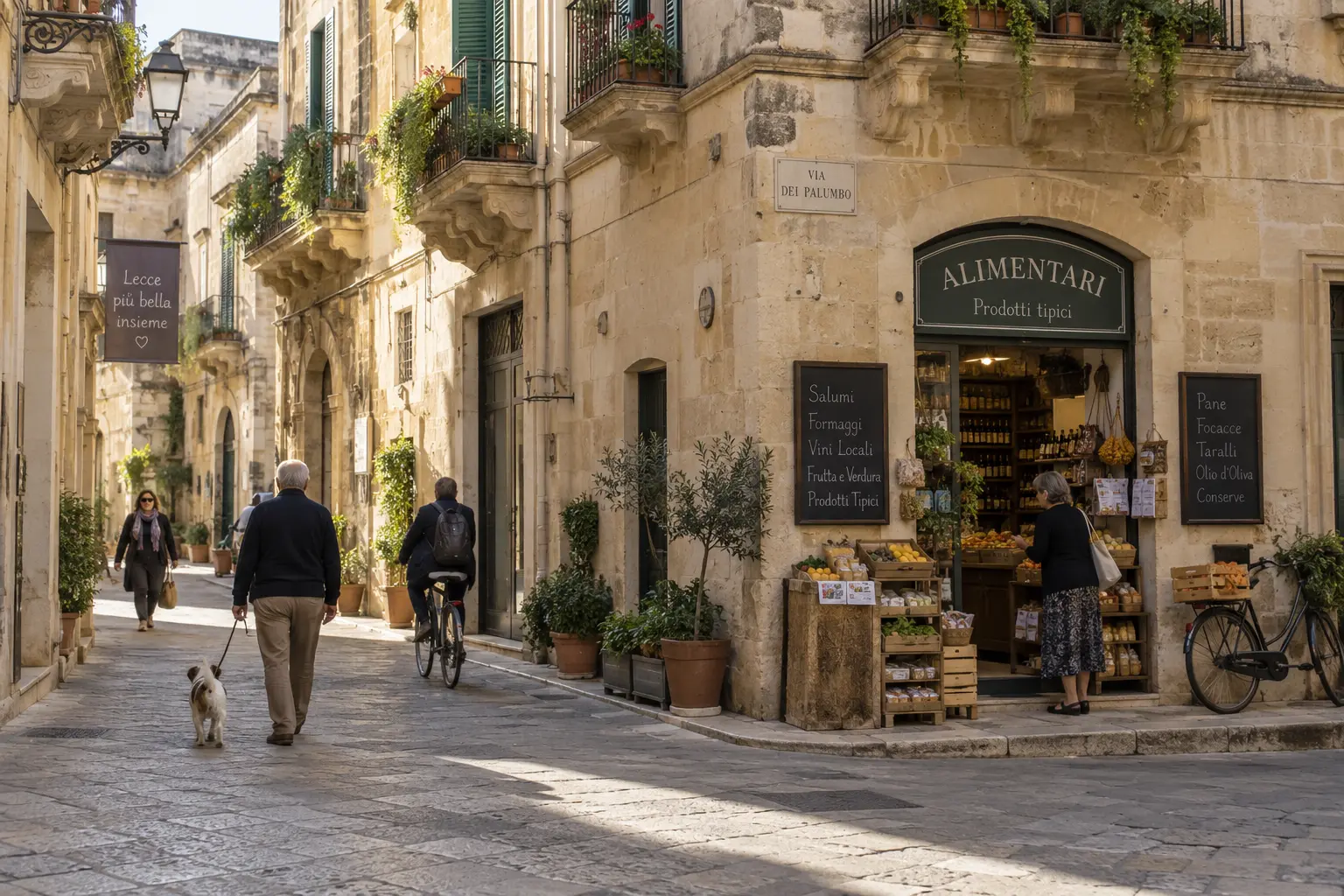
Lecce is the main city of the Salento, built in a soft golden stone that gives its center an unusually coherent baroque character. Unlike the coastal towns around it, it is a working city with a university, hospitals, courts, and shops that stay open through the winter.
That distinction matters for retirees. Many of the most photographed places in Puglia are seasonal, and living in one means months of shuttered streets. Lecce keeps a population, which is why it is the most common recommendation in the region for people who want year round life rather than a summer.
The honest counterweight is travel. The Salento is a long way from northern Italy and from the United States, and journeys home usually involve connections.
At a glance
A practical planning snapshot, not a substitute for checking current housing, transport, and healthcare details for a specific address.
- Estimated monthly budget
- Varies by housing and lifestyle; compare current local listings before budgeting
- Housing
- Generally below central and northern Italy, rising in the historic center
- Nearest major airport
- Regional airport within reach, with connections rather than direct U.S. flights
- Healthcare access
- Hospital provision in the city, thinner in the surrounding small towns
- Train and public transport
- Rail and bus links regionally, most of the center walkable
- Car needed
- Helpful
- Climate
- Hot dry summers, mild winters, strong sun most of the year
- English accessibility
- Some English in the city, limited in the surrounding towns
What works here
- Mild winters and an outdoor life that continues past October.
- A university city, so there is cultural life and a non tourist population.
- Costs generally lower than comparable cities in the center and north.
- Coast within a short drive on both the Adriatic and Ionian sides.
The tradeoffs
- Travel to the United States is long and typically involves connections.
- Summer heat is serious, and older housing is not always built for it.
- A car is useful for the coast and surrounding towns even though the center is walkable.
- Less English than Tuscany, so Italian matters sooner.
Neighborhoods and nearby towns
Salento coastal towns
Beautiful and seasonal, much quieter from November
Inland villages
Lower housing costs, greater distance to services
Larger regional cities
Additional hospital and transport options to the north
Who this suits
- Retirees who want mild winters without moving to a resort town.
- People who prefer a city with students, markets, and year round routine.
- Anyone weighing the 7 percent regime who wants a real city nearby.
Related places and guides
Sources and references
We cite primary and official sources wherever possible. Requirements change, so treat these as starting points and confirm current details directly.
- 1.Regional health service structureApulian regional health authority. Hospital and specialist access varies by province.
- 2.Local property listingsRegional real estate market. Use local agents as well as national portals for long term rentals.
Newsletter
Get the Italy Retirement Checklist
One email at a time on visas, taxes, healthcare, housing, and places. Start with our planning checklist for Americans.